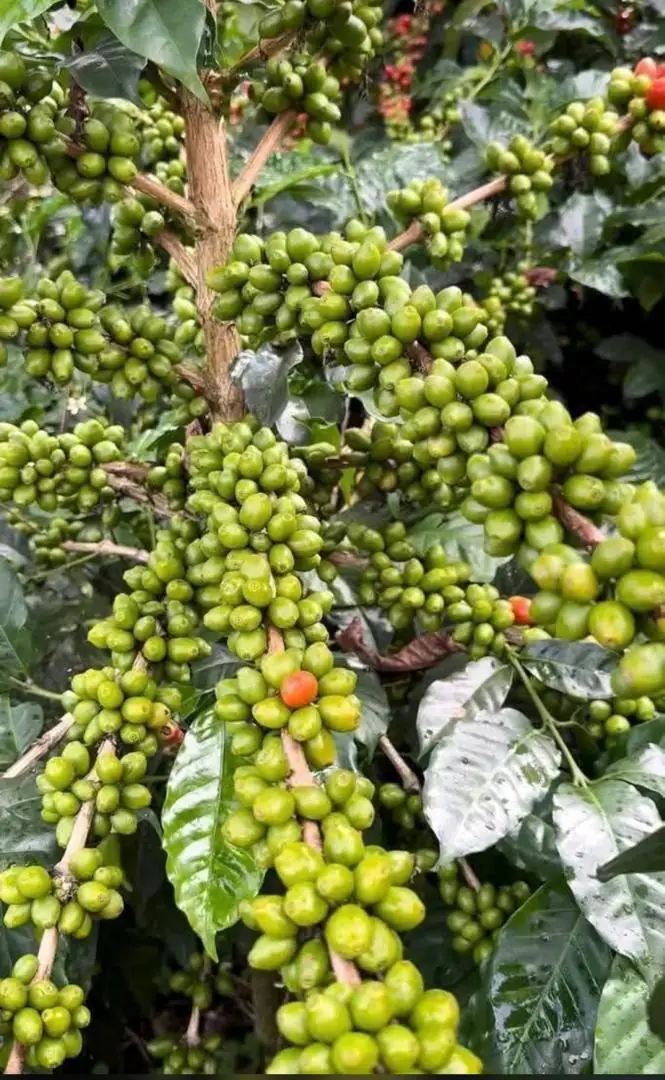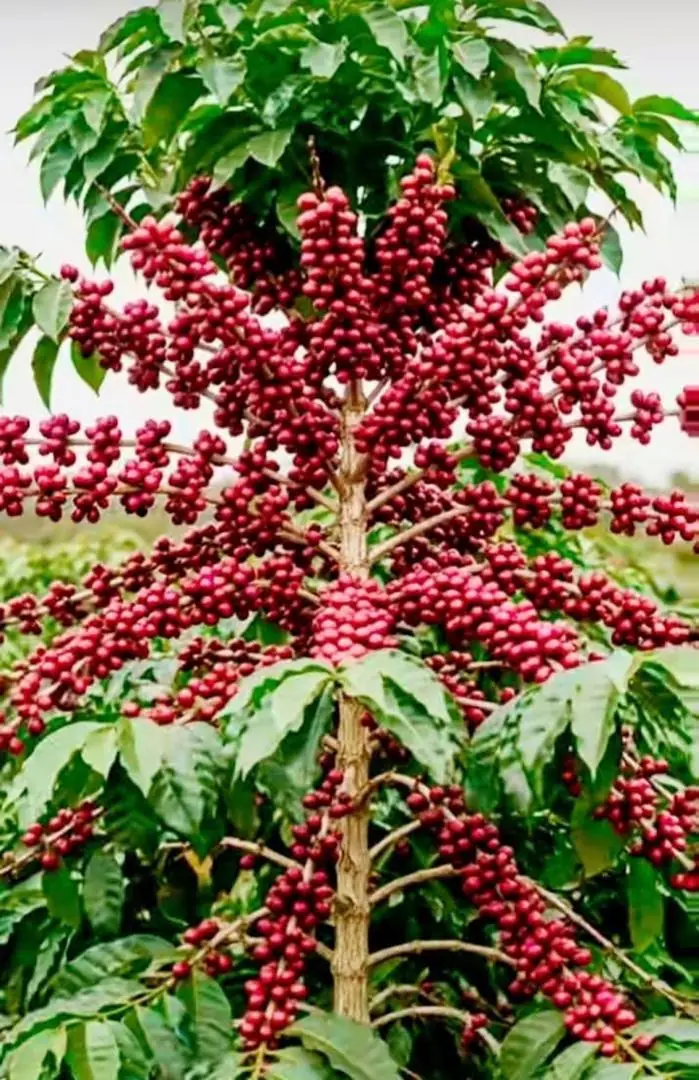
Altitude is the most quoted fact about Kilimanjaro coffee and the least explained. Rocky Specialty Coffee describes its Arabica as growing between 1,500 and 2,000 metres above sea level on the slopes around Moshi. That number is not decoration. It is shorthand for a set of growing conditions that decide how much flavour a cherry has time to build.
Altitude is really an argument about temperature
Air cools as it rises — roughly 6.5 °C for every 1,000 metres of elevation. A farm at 1,800 metres sits perhaps ten to twelve degrees cooler than the plain below Moshi, and the nights are cooler still.
Coffee responds to cool by slowing down. The same variety that ripens in six or seven months at low elevation can take eight or nine at altitude. Nothing is added during those extra weeks — but the plant keeps feeding sugars and organic acids into a seed that is itself growing more slowly. The result is a bean with more stored in less space.
Density, and why the mill cares about it
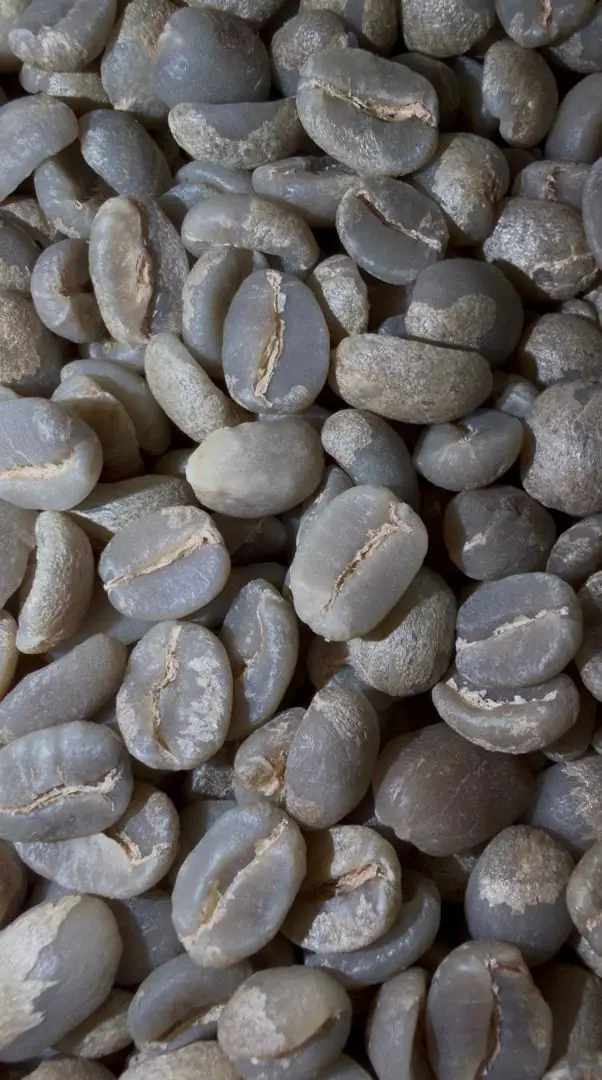
That slow build shows up physically. High-grown Arabica is denser, and density is not a trivia point — it changes how the coffee behaves at every later stage:
- Sorting. Density is one of the properties a dry mill separates on, which is part of how lots are graded.
- Roasting. A denser bean carries heat differently and holds its structure longer. That tolerance is part of why high-grown coffee can be taken to a light roast and still taste sweet rather than green.
- Brewing. Denser beans tend to need a slightly finer grind or a little more contact time to give up the same amount.
What you actually taste
The usual description of high-grown Arabica is more acidity, more defined sweetness and a clearer aroma. Acidity here means the bright, fruit-like quality you notice in the first second — malic and citric character rather than anything sharp or sour.
It is worth being blunt about the other side. Lower-grown coffee is not bad coffee. It is generally softer, lower in acidity and more weighted toward body. Plenty of people prefer it, particularly with milk and sugar. Altitude changes the direction of a coffee; it does not settle an argument about quality.
The other half of the story: soil, rain and shade
Elevation never acts alone. Three other things come with this particular mountain:
Young volcanic soil
Kilimanjaro is a volcano, and the soils on its southern flank are geologically young, free-draining and mineral-rich. Free drainage matters as much as mineral content — coffee roots dislike standing water.
Two rainy seasons
Northern Tanzania gets long rains from roughly March to May and short rains around October to December. The long rains drive the main flowering, which sets the cherries that will be picked later in the year. How much rain arrives, and when, moves the whole harvest.
Intercropping and shade
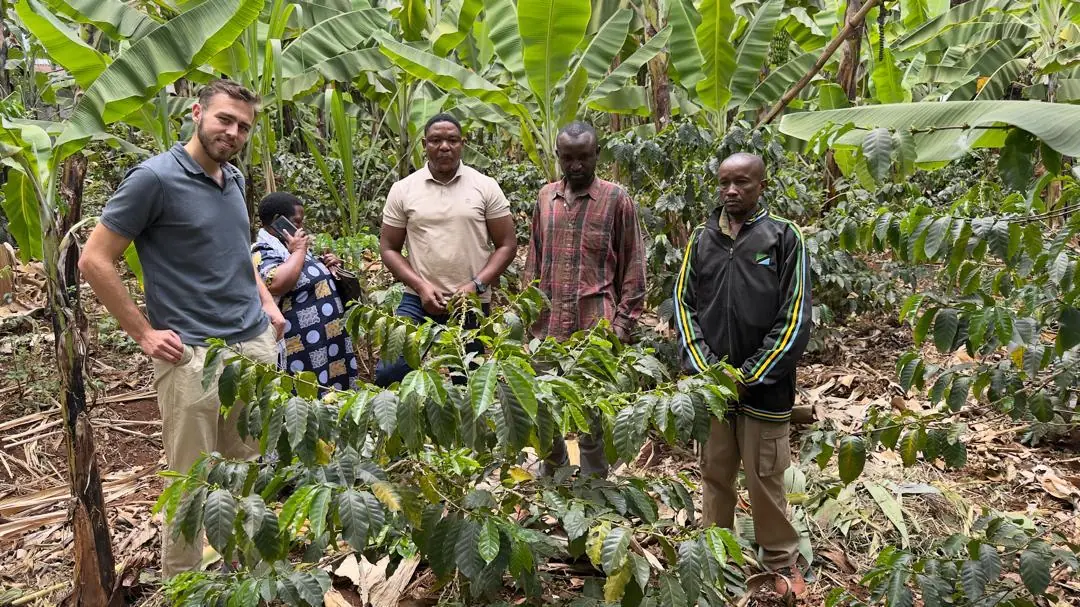
On the Kilimanjaro slopes coffee has long been grown inside mixed smallholder plots alongside bananas and food crops rather than in open monoculture. The canopy moderates temperature and light, which pushes in the same direction as altitude: slower, steadier ripening.
How this shows up in the roastery
Knowing a coffee is dense and high-grown is the starting point for every decision that follows. It is why the four Rocky roast profiles all begin from the same question — how much of this origin character do you want to keep, and how much roast character do you want to add on top of it.
If you want the altitude to be obvious in the cup, start at the lighter end and brew it as filter coffee. If you want depth and sweetness instead, move along the range. Our guide to choosing a roast walks through that choice, and Origin & Process covers what happens between the tree and the bag.
Questions we get asked
Is high-altitude coffee always better?
No. Altitude usually means more acidity, more defined sweetness and a denser bean, which is what specialty buyers tend to look for. It does not suit every preference — lower-grown coffee is often softer and more body-forward, and many people prefer that, especially with milk.
What altitude is Rocky Coffee grown at?
Rocky Specialty Coffee describes its Arabica as grown between 1,500 and 2,000 metres above sea level on the slopes of Mount Kilimanjaro, in the Moshi area of the Kilimanjaro region, Tanzania.
Does altitude change how I should brew the coffee?
Slightly. Denser high-grown beans often need a marginally finer grind or a little more contact time than softer low-grown coffee to extract the same amount. Our grind and brew guide gives starting points for each method.