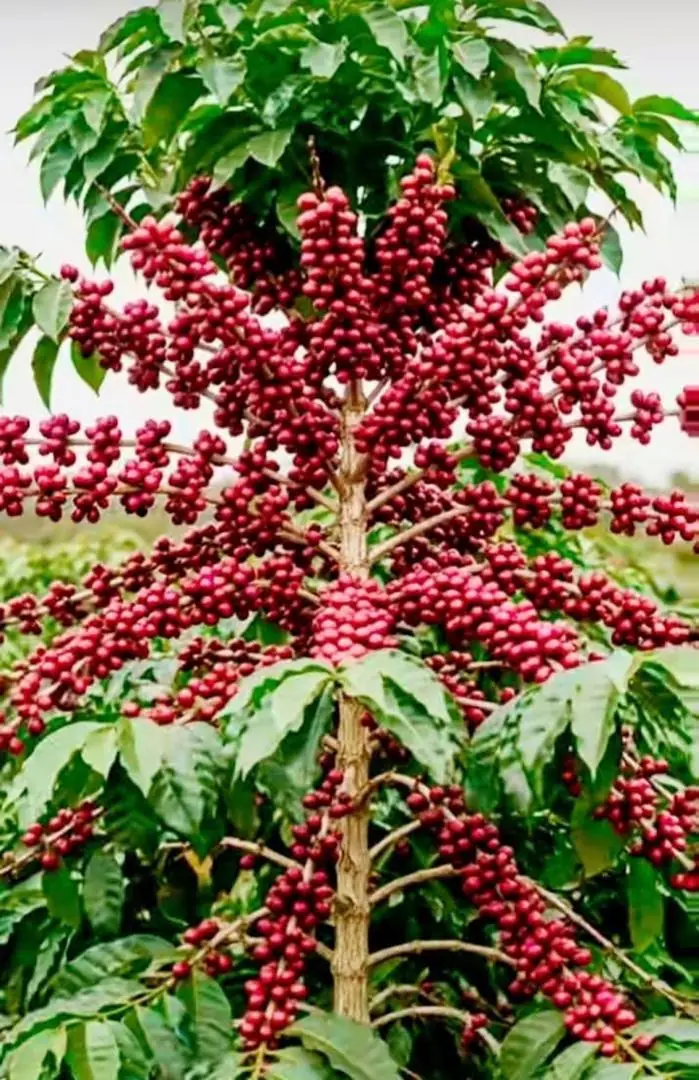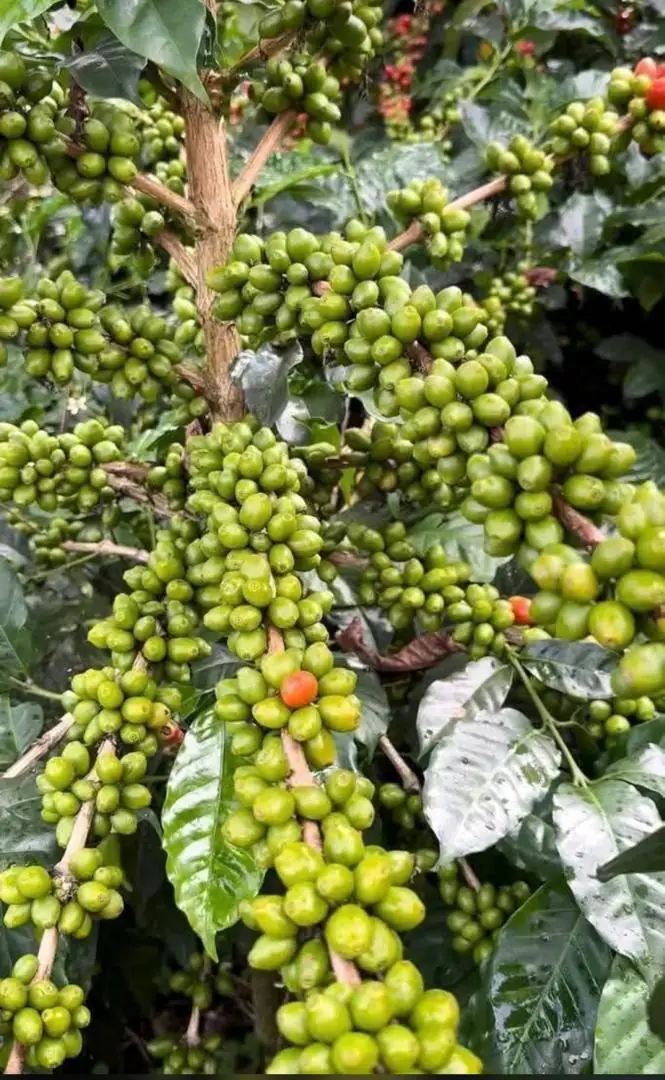
Variety is the least understood line on a coffee bag, and the one most likely to be missing. It is worth understanding anyway, because it explains a good deal about why coffee farms look the way they do.
Species, variety, cultivar
Two species account for nearly all coffee grown commercially. Coffea arabica is the higher-altitude, lower-yielding, more aromatic one, and carries roughly half the caffeine of the other. Coffea canephora, usually sold as robusta, is hardier, more disease-tolerant, heavier in body and far more bitter.
Within Arabica, almost everything descends from two early lineages, Typica and Bourbon. Everything after that is selection and breeding — a named variety or cultivar is a population chosen for particular traits and then propagated.
What variety actually controls
Less than people hope, and more than they expect:
- Yield — how much a tree produces, which decides whether a smallholder can live on it.
- Disease resistance — to coffee leaf rust and coffee berry disease above all. This is usually the deciding factor in what gets planted.
- Plant architecture — tall or compact, which affects planting density and how the farm is managed.
- Bean size and shape — relevant to grading.
- Cup potential — a ceiling, not a result.
That last point is the one worth holding onto. Variety sets an upper limit on what a coffee could be. Altitude, picking, processing, drying, storage and roasting all decide how close to that limit you actually get, and any one of them can undo it entirely.
Varieties associated with northern Tanzania
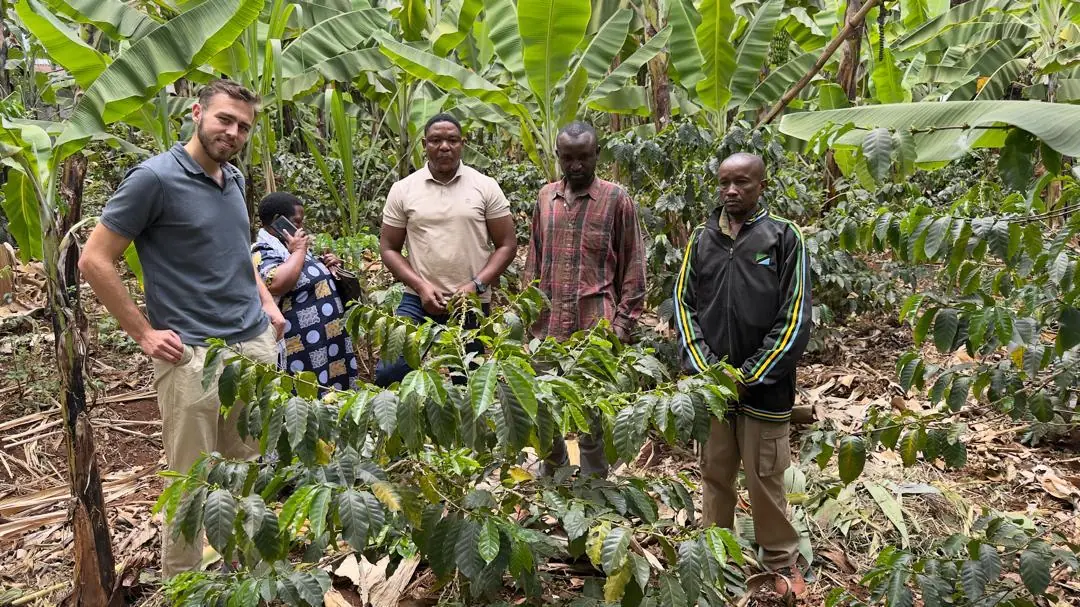
Arabica arrived in the Kilimanjaro area in the late nineteenth and early twentieth centuries, and the plantings traced back to Bourbon and Typica lineages. Over the following decades, selection work built on that base. Names you may encounter in the region include:
- Bourbon and Typica types — the historical base of the region’s coffee.
- Kent — a Typica selection originally from India, planted widely in East Africa for its tolerance of leaf rust.
- N39 and KP423 — selections long associated with Tanzanian coffee growing and distributed to farms in the north.
- Compact hybrids released by Tanzanian research work, bred for resistance to coffee berry disease and leaf rust. The country’s coffee research institute is based at Lyamungu, on the Kilimanjaro slopes not far from Moshi, which is why so much of this material originates locally.
These are regional associations, not a claim about any particular lot. What is growing on a given farm depends on when it was planted, what was available from the nursery that year, and what the farmer was replacing. If the variety in a specific coffee matters to you, ask about that coffee rather than inferring it from the region.
Why farms replant, and why resistance usually wins
Coffee trees are productive for decades but not forever, and disease pressure changes over a tree’s lifetime. For a smallholder deciding what to plant, a variety that survives coffee berry disease and yields reliably is worth more than one with a higher ceiling in a cupping lab. Those are reasonable economics, and they explain most of what is in the ground in the region today.
It also means the honest answer to “which variety is best?” depends entirely on who is being asked and what they are optimising for.
Peaberry is not a variety
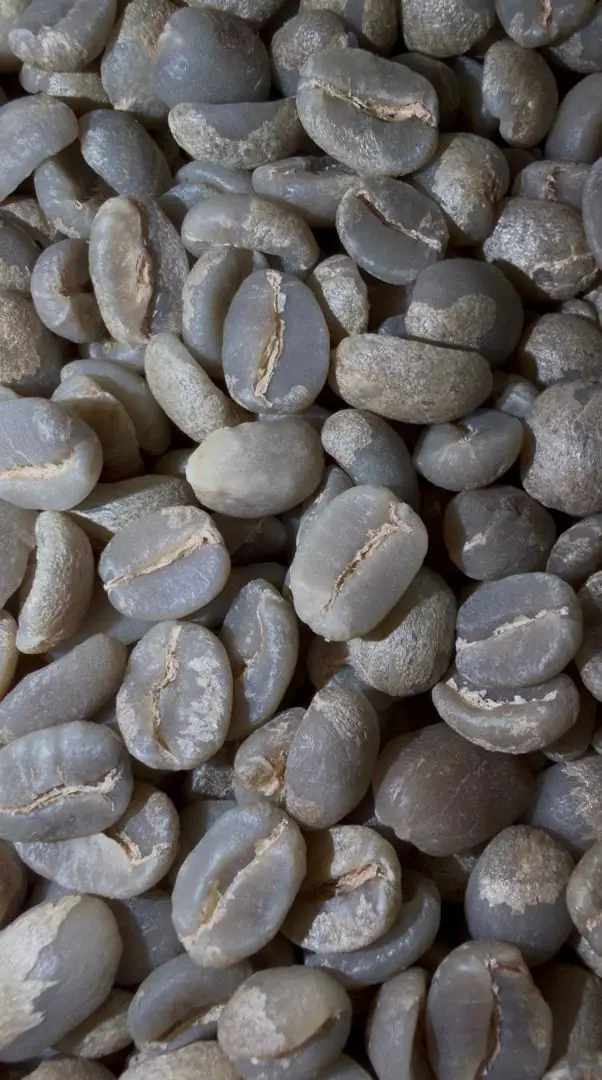
Worth stating plainly, because Tanzanian peaberry is well known and widely misunderstood. A normal coffee cherry contains two seeds with flat facing sides. Occasionally only one seed develops, and it grows round instead of flat — that is a peaberry. It occurs in a small share of any harvest, in any variety, and is sorted out separately at the mill because round beans of uniform size roast differently from flat ones.
So peaberry describes a seed, not a plant. Whether it tastes better is genuinely argued about; that it roasts more evenly as a uniformly shaped lot is not.
Asking about your lot
“Which variety is this?” is a fair question and a good one. Sometimes the answer is a name, sometimes it is “mixed smallholder plantings”, and sometimes it is “we do not know” — all three are honest, and the last is more common than the industry likes to admit.
Rocky Coffee does not publish a fixed variety for its coffee, because what comes through the wet mill reflects what is growing on the slopes around Moshi. For current lots, ask — and Origin & Process covers the stages that matter more to the cup than the variety name does.
Questions we get asked
Is peaberry a coffee variety?
No. A peaberry is a cherry in which only one seed developed, so it grows round instead of flat. It occurs in a small proportion of any harvest and in any variety, and is sorted separately at the mill because uniformly round beans roast differently from flat ones.
Which variety does Rocky Coffee sell?
The site does not claim a fixed variety, because the coffee reflects what is grown on the Kilimanjaro slopes around Moshi rather than a single cultivar block. Ask the team about current lots and they will tell you what is known about them.
Does variety matter more than roast level?
For what ends up in your cup, no. Variety sets an upper limit on a coffee’s potential, but altitude, picking, processing, drying, storage and roast level all decide how much of that potential survives — and roast level is the one you choose when you buy.