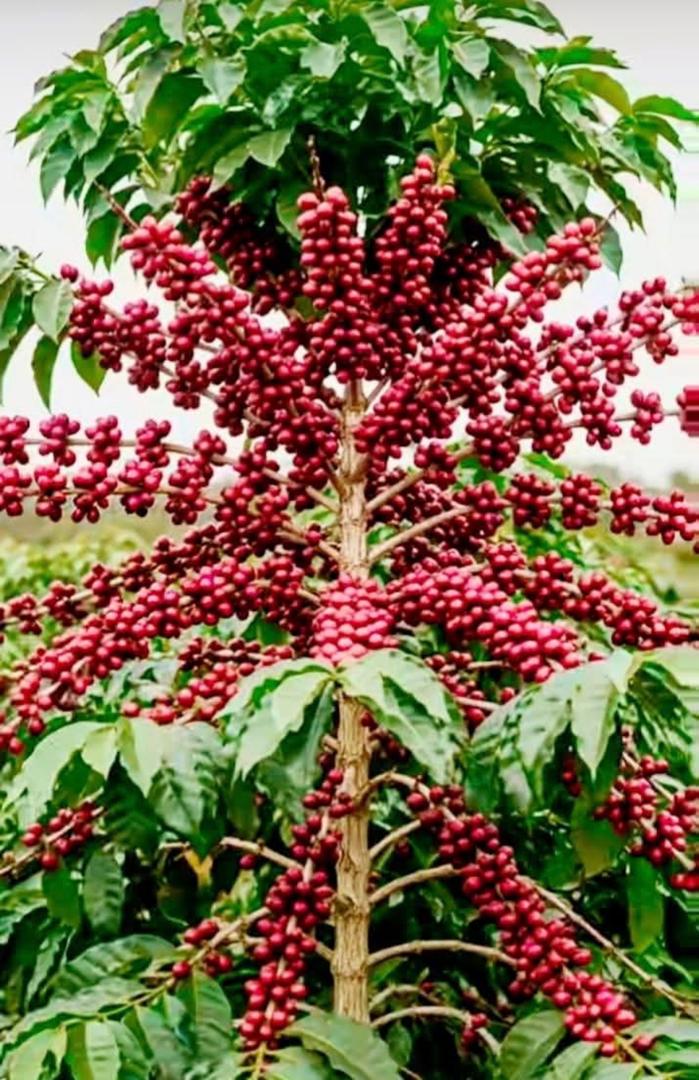
Coffee begins as fruit. Long before the familiar roasted bean reaches a grinder, it develops as a cherry on a coffee tree. For Rocky Specialty Coffee, that story is tied to Arabica grown on the slopes of Mount Kilimanjaro between 1,500 and 2,000 metres above sea level.
The journey after growing is a sequence of decisions. Each stage can protect—or diminish—the work already completed at origin.
Altitude and origin
High-elevation environments can slow the development of coffee cherries. Rocky identifies this Kilimanjaro landscape, its volcanic soils and the surrounding Moshi region as the foundation of the coffee’s identity.
Picking and pulping
The company’s product information describes harvest through the selection of ripe cherries. After picking, pulping removes the fruit’s outer layers and exposes the coffee that will continue through wet processing.
Fermentation, washing and drying
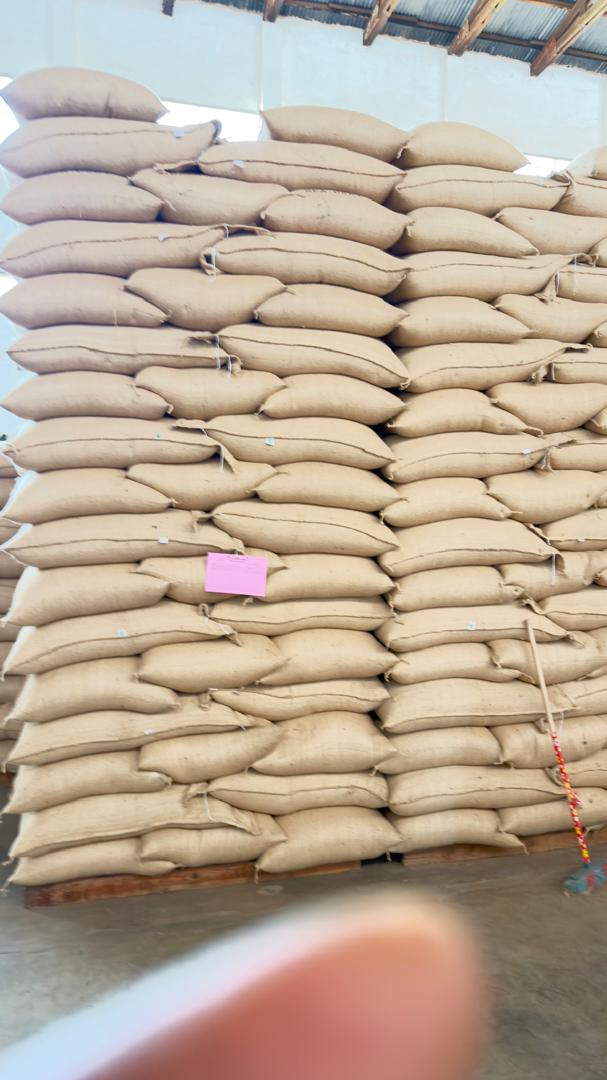
Fermentation helps loosen the remaining mucilage. Washing removes it, and drying reduces moisture so the coffee can be stored and prepared safely for later stages. The green coffee pictured throughout this site is the result before roasting turns the bean brown.
Green coffee at the sample table
Green beans can be inspected and separated into samples before roasting. Keeping lots identifiable allows comparison and supports clearer decisions at the cupping table.
Choosing a roast
Rocky lists four roast options: Light, Medium, Medium-Dark and Dark. A lighter roast tends to make clarity and acidity more noticeable. Medium seeks balance. Medium-Dark develops deeper roast character, while Dark offers the boldest roast expression.
There is no universally correct roast. Start with the way you already enjoy coffee, then explore from there.
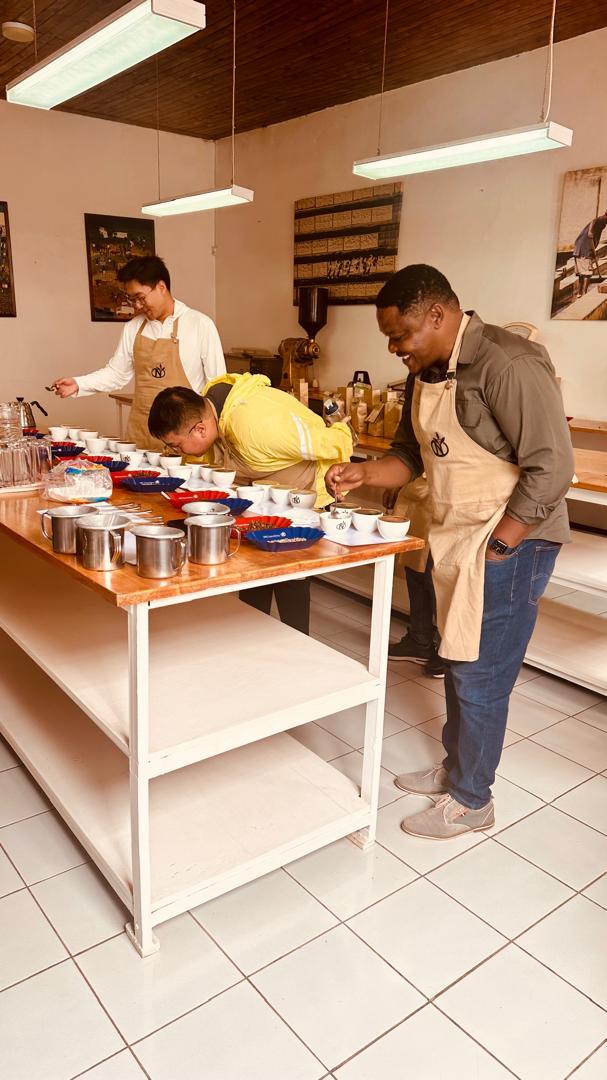
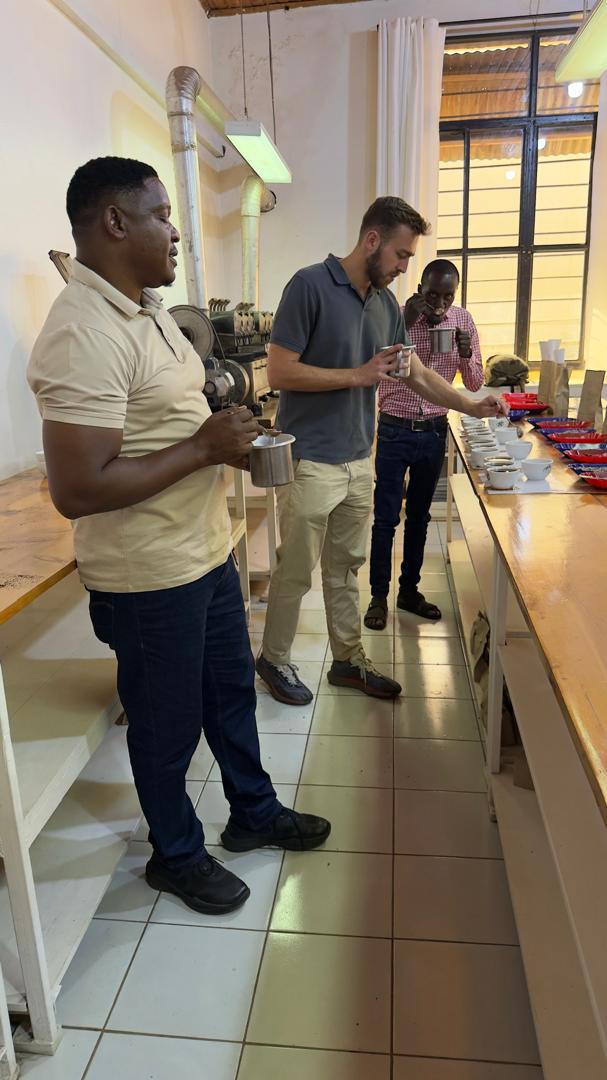
What happens at a cupping?
Cupping places samples beside one another in a consistent format. Tasters can compare aroma, acidity, body, sweetness and balance without changing the preparation from cup to cup. It is both a quality tool and a shared language.
Keeping coffee fresh
After opening coffee, protect it from the things that accelerate staling. Rocky’s package guidance recommends an opaque, airtight container kept away from light, heat and moisture.
The journey ends only when coffee is brewed and shared. Every step before that moment exists to make the cup worth remembering.